50/30/20 budget on $82,000 a year
About $5,543 a month after federal taxes. Here is exactly how to split it, per month and per paycheck.
Your 50/30/20 breakdown
| Bucket | Per month | Per biweekly paycheck | Per year |
|---|---|---|---|
| Needs (50%) rent, utilities, groceries, insurance, minimum debt payments | $2,772 | $1,279 | $33,258 |
| Wants (30%) eating out, streaming, shopping, travel | $1,663 | $768 | $19,955 |
| Savings & extra debt (20%) | $1,109 | $512 | $13,303 |
At $82,000, $1,109 a month in the savings bucket is enough to build a 3-month emergency fund in about 8 months and then move on to retirement and bigger goals. The risk at this income is lifestyle creep: wants quietly expanding to fill the room. Writing the split down per paycheck keeps it honest.
From salary to take-home pay
The 50/30/20 rule works on take-home pay, not your salary. Here is a 2026 estimate for a single filer taking the standard deduction ($16,100), with no state income tax and no pre-tax deductions:
| Item | Per year | Per month |
|---|---|---|
| Gross salary | $82,000 | $6,833 |
| Federal income tax | −$9,210 | −$768 |
| Social Security (6.2%) | −$5,084 | −$424 |
| Medicare (1.45%) | −$1,189 | −$99 |
| Estimated take-home | $66,517 | $5,543 |
Your top federal bracket at this income is 22%, but your overall rate is lower because only the dollars above each threshold are taxed at the higher rate. State and local taxes, 401(k) contributions and health insurance premiums will lower your real take-home, so plug your actual paycheck into the budget calculator for an exact split.
What the savings bucket can do
| Goal | Estimate |
|---|---|
| 3-month emergency fund (3 × needs) | $8,315, reached in about 8 months |
| Saved after 1 year (4% APY example) | $13,550 |
| Saved after 5 years | $73,500 |
| Saved after 10 years | $163,244 |
The 4% figure is only an example of a high-yield savings rate; real rates change. See how growth compounds with the compound interest calculator.
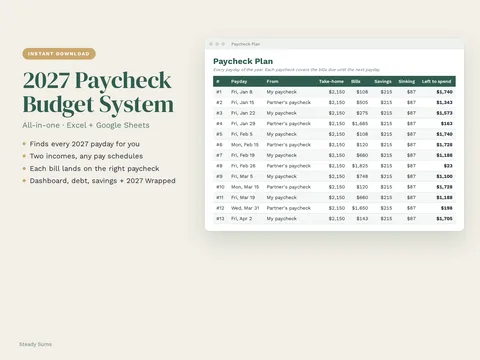
2027 Paycheck Budget System · $17.00
Type your pay schedule and bills once. It finds every 2027 payday, puts each bill on the right paycheck and builds your monthly budget for you.
See it on Etsy →Compare nearby salaries
Paid by the hour? See what $39 an hour is per year. Paid every two weeks? Find your 2027 paycheck calendar.
Questions people ask
How much should I spend on rent making $82,000 a year?
A common guideline is up to 30% of gross pay, about $2,050 a month. Under 50/30/20, all needs together (rent, utilities, groceries, insurance) should fit in about $2,772 a month.
What is $82,000 a year per month after taxes?
About $5,543 a month for a single filer in 2026 with the standard deduction and no state income tax. State taxes and payroll deductions will lower this.
How much should I save on a $82,000 salary?
The 50/30/20 rule suggests about $1,109 a month ($13,303 a year), including any extra payments on debt above the minimums.
What is $82,000 a year hourly?
About $39.42 an hour, based on 40 hours a week for 52 weeks (2,080 hours).
Steady Sums shares general education, not financial advice. Figures on this page are estimates calculated from the assumptions shown. For decisions about your situation, talk to a licensed professional.
Keep planning
Budget calculator
Enter your real paycheck and see your exact split.
Open →The 50/30/20 rule explained
Needs vs. wants, and what to do when your numbers don't fit.
Open →Every salary budget
From $20,000 to $250,000 a year.
Open →One calm money move a week.
A 3-minute Tuesday email with one simple step for budgeting, saving and paying off debt. Join free and get a printable $1,000 emergency fund tracker.