Budgeting has a reputation for being tedious, but a first budget can be simple. The goal isn't to track every penny forever. It's to know three things: what comes in, what must go out, and what's left to decide on.
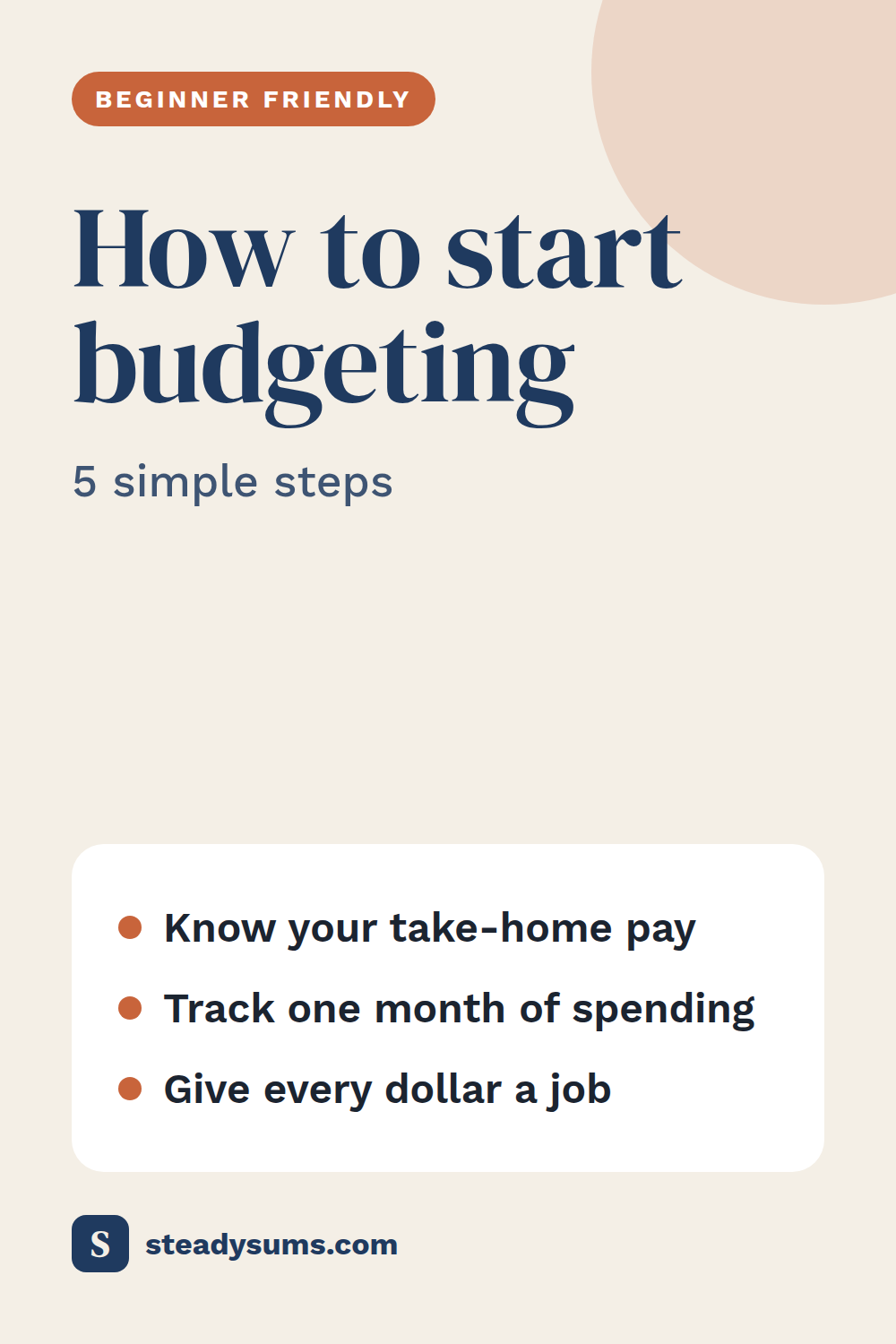
Step 1: Find your monthly take-home pay
Look at your last two or three paychecks and add up what reached your bank account in a typical month. If your income varies, use your lowest normal month.
Step 2: List your must-pay bills
Rent or mortgage, utilities, phone, insurance, transportation, groceries and minimum debt payments. Use your bank statements to get real amounts rather than guesses.
Step 3: Look at last month's spending
Scroll through one month of bank and card transactions and group them roughly: eating out, shopping, subscriptions, fun. Most people find one or two surprises here. That's the point. No judgment, just information.
Step 4: Give every dollar a job
Take your income, subtract your must-pay bills, and decide what to do with what's left: how much for groceries and gas, how much for fun, and how much for savings or extra debt payments. If you want a starting split, try the 50/30/20 rule.
Step 5: Check in once a week
Pick a day, like Sunday morning, and spend ten minutes comparing what you planned with what you spent. Adjust next week's plan if needed. Budgets work because of this small, regular check-in, not because the first plan was perfect.
Tips that make it stick
- Start rough. Round numbers are fine. You'll get more accurate over time.
- Budget for fun. A budget with zero fun money usually breaks within a month.
- Plan for irregular costs. Divide yearly bills by 12 and set that aside monthly.
- Expect to adjust. The first three months are practice.
Pick a tool you'll actually use
Paper, a spreadsheet or an app all work. What matters is that it's quick enough to open every week. Our free budget calculator is a good place to try your first numbers.
Try the numbers yourself.
Our free budget calculator works it out in seconds. No sign-up.
Questions people ask
What is the easiest budgeting method for beginners?
Many beginners start with the 50/30/20 rule because it only uses three categories: needs, wants and savings.
How long does it take to make a budget?
A first budget usually takes under an hour. Weekly check-ins take about ten minutes.
Do I need to track every expense?
Not at first. Tracking your main categories is enough to spot patterns. You can add detail later if it helps.
Save this guide for later.
Pin it to your budgeting board so it's there when you need it.
Steady Sums shares general education, not financial advice. For decisions about your situation, talk to a licensed professional.
More guides
- How to budget when you're paid every two weeks
- Debt snowball vs. avalanche: which should you use?
- The 50/30/20 budget rule, explained with real numbers
- How much should be in your emergency fund?
- Sinking funds: the easy way to pay for big expenses
- How a zero-based budget works (and how to start one)
- The cash envelope system: how cash stuffing works
- The 52-week savings challenge: how to save $1,378 in a year
- How to do a no-spend challenge (and actually save money)
- How to pay off credit card debt faster
- Compound interest explained simply
- How to budget when your income changes every month
- How to stop living paycheck to paycheck