How much rent can I afford?
The 30% rule is a fine start. Three quick checks tell you whether a rent truly fits your budget.
The rent number on a listing is only part of the picture. What you can afford depends on your income, your other bills and what moving in will cost up front. Here are three quick checks that give you a safe range before you tour a single place.
The quick answer: the 30% rule
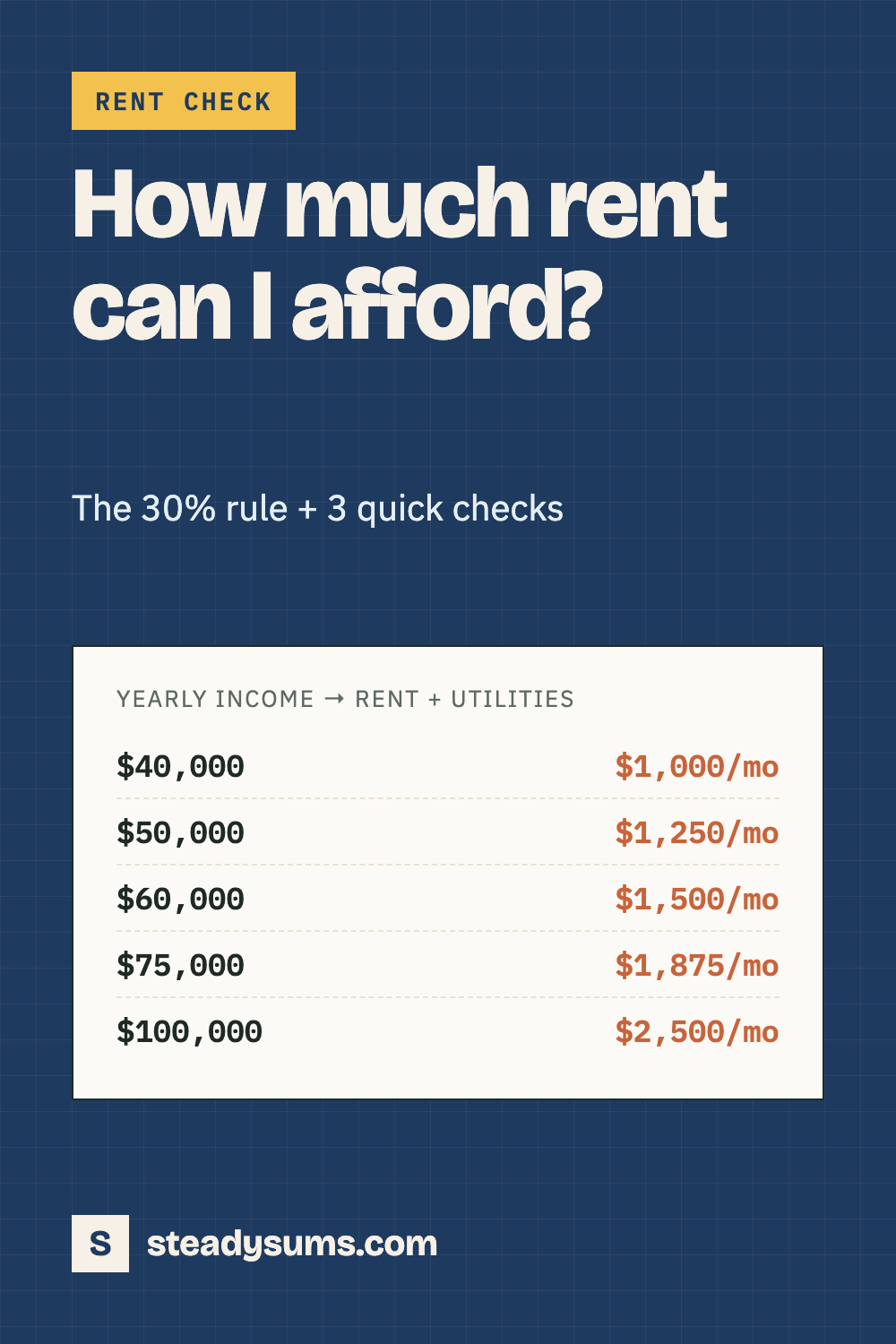
The most common guideline says to keep housing costs at or below 30% of your gross (before-tax) monthly income. A shortcut: divide your yearly salary by 40. That gives the same number.
The 30% line comes from how federal housing agencies measure affordability. HUD counts a household as cost-burdened when housing costs, including utilities, are more than 30% of income, and severely cost-burdened above 50%. So the 30% target covers rent plus utilities, not rent alone.
| Yearly income | Monthly (before tax) | 30% for rent + utilities |
|---|---|---|
| $30,000 | $2,500 | $750 |
| $40,000 | $3,333 | $1,000 |
| $50,000 | $4,167 | $1,250 |
| $60,000 | $5,000 | $1,500 |
| $75,000 | $6,250 | $1,875 |
| $100,000 | $8,333 | $2,500 |
Many landlords use a related screen: your gross income should be about 3 times the monthly rent. That works out to rent of about 33% of income, slightly looser than the 30% rule.
Check 2: the take-home test
The 30% rule uses income before taxes, but you pay rent with what lands in your account. So run a second check on take-home pay.
In a 50/30/20 budget, about half of your take-home covers needs: housing, utilities, groceries, transportation, insurance and minimum debt payments. Add up those needs with the new rent in place. If the total runs well past 50%, the rent may squeeze everything else, even if it passes the 30% rule.
Our free budget calculator does this split for you in a few seconds.
Check 3: the debt test
A car payment, student loans or card minimums change the picture. The CFPB describes your debt-to-income ratio as all your monthly debt payments divided by your gross monthly income. Lenders use it to judge whether you can handle another payment, and it works the same way for you: the more of your income already goes to debt, the less room you have for rent.
If you carry a lot of debt, aim for rent below 30% and put the difference toward paying debt down faster.
Count the full monthly cost
Before you compare apartments, turn each one into a single monthly number. Include:
- Rent
- Electric, gas, water, trash and internet (ask the landlord or current tenant for typical bills)
- Renters insurance
- Parking, pet rent, amenity or trash fees
- Any change in commute cost
A cheaper unit with a long drive or high utility bills can cost more each month than the one down the street.
Plan for move-in costs
Moving costs come all at once. Set aside cash for:
- First month's rent (some places also ask for last month)
- Security deposit
- Application and screening fees
- Movers or a truck, plus basic household items
- Utility setup or deposits
Treat this as a sinking fund: pick a move date, add up the list and save a set amount each month until you get there. Try to move without draining your emergency fund.
A quick example
Jordan earns $54,000 a year, or $4,500 a month before tax.
- 30% rule: $4,500 × 0.30 = $1,350 for rent and utilities
- Utilities and internet run about $150, so the rent target is about $1,200
- Jordan also has a $300 car payment, so the search tops out around $1,150 to leave room for savings
A $1,450 apartment would pass the landlord's 3-times screen ($1,450 × 3 = $4,350), but it would push housing past 35% of income. Jordan keeps looking.
If every place costs more than 30%
In many cities, staying under 30% is hard. That doesn't mean you're doing it wrong. A few ways to make the numbers work:
- Share the cost. A roommate or a smaller unit is the biggest lever.
- Trim other needs. Shop around for car insurance, phone and internet plans.
- Ask about the lease. Some landlords offer a lower rate for a longer lease or a move-in date in a slow season.
- Track it for 90 days. If the rent is a stretch, track every dollar for the first three months so small leaks don't turn into card debt.
What's your money style?
8 everyday money moments reveal your style, your blind spot and a 3-step plan. Compare with a partner.
Take the quiz →Try the numbers yourself
Enter your take-home pay and see how much the 50/30/20 split leaves for rent and other needs. No sign-up.
Open the budget calculator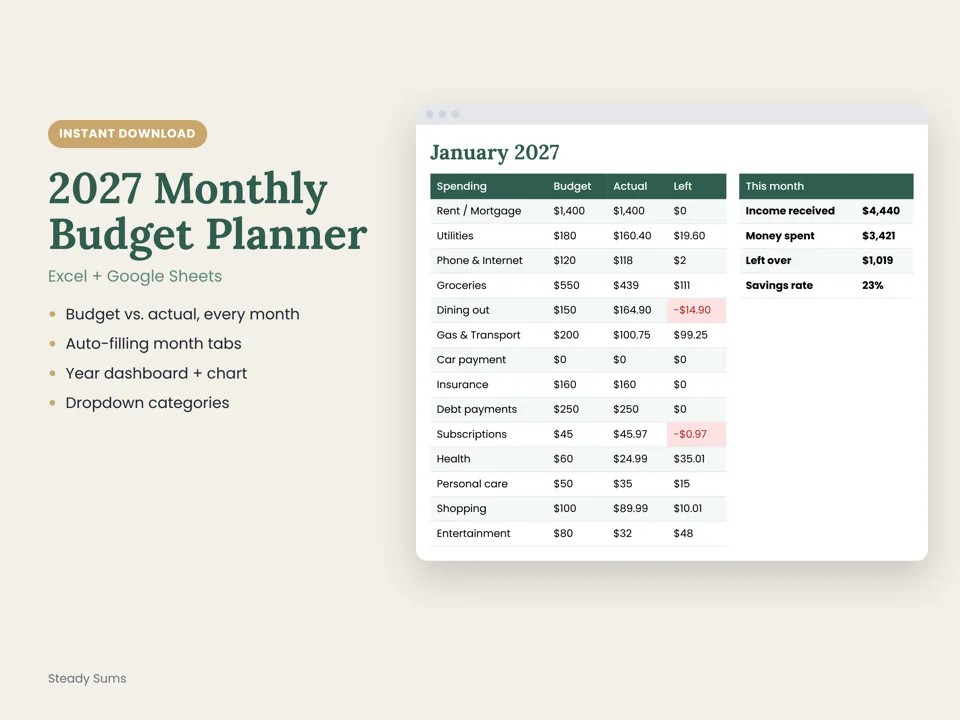
See rent next to every other bill.
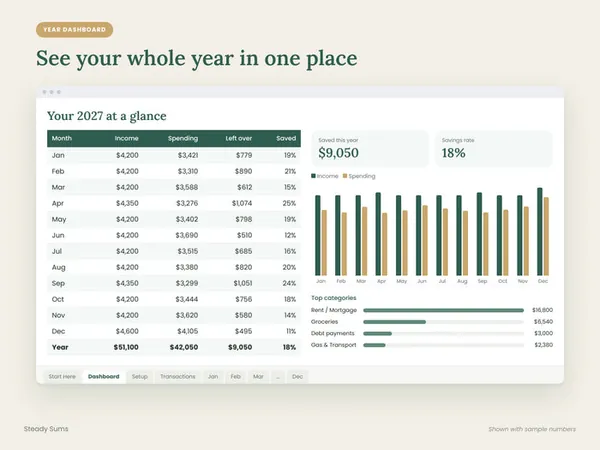
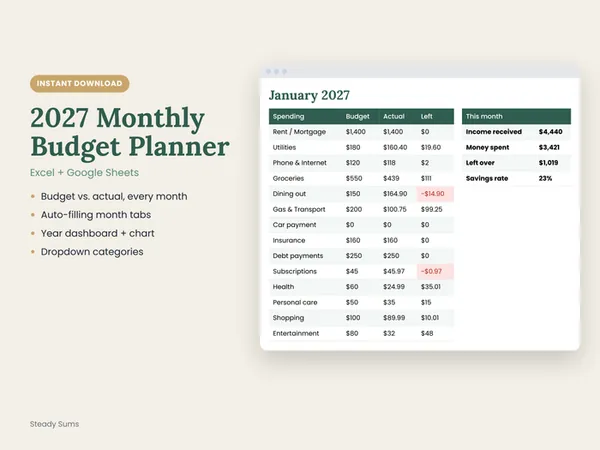
Plug in your income, rent and bills and watch what's left each month. Works in Excel and Google Sheets.
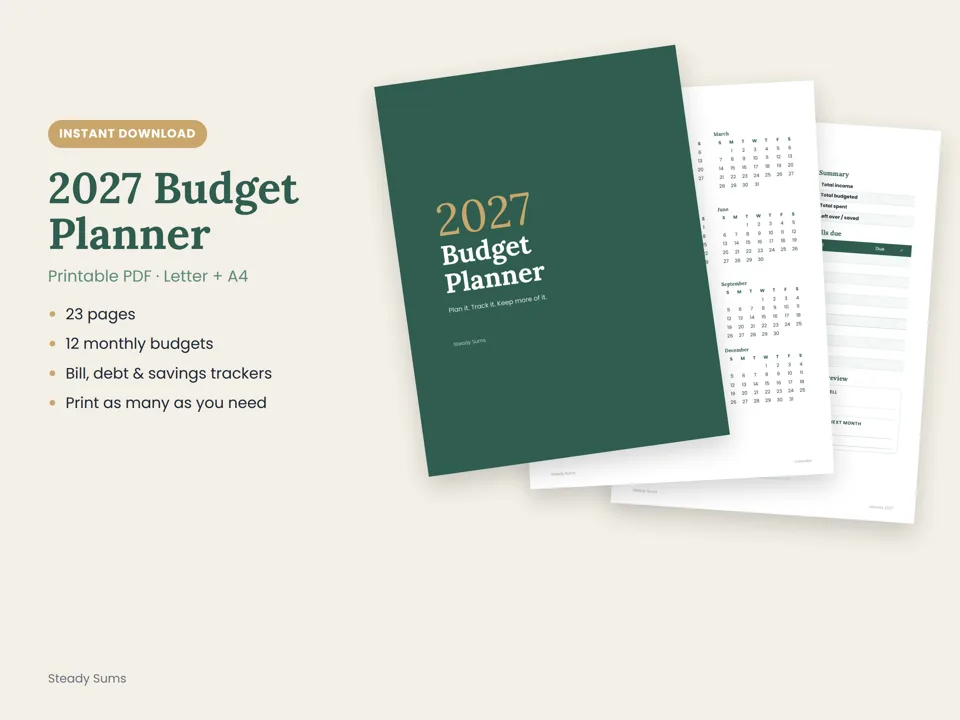
A printable budget for your new place.
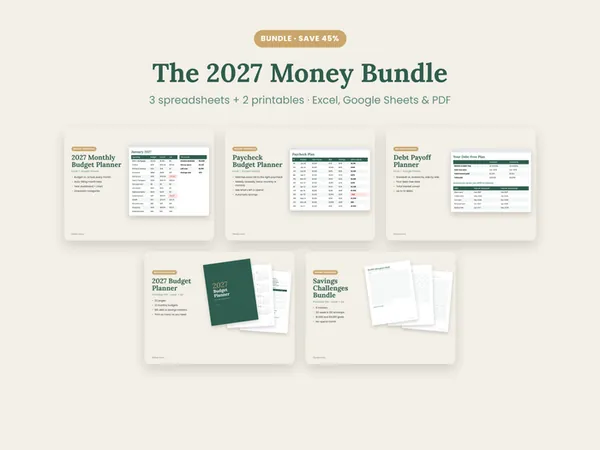
Monthly budget, bill tracker and savings pages to print at home. Handy for planning move-in costs.
Know your real rent budget every month.
Budget, debt payoff and savings goals in one calm app, on your phone or computer. Free for 14 days, then $5/month. No card needed to start.
Try the Planner freeQuestions people ask
How much rent can I afford on my salary?
A common guideline is 30% of your gross monthly income for rent plus utilities. Divide your yearly salary by 40 for a quick monthly number, then check it against your take-home pay and debts.
Does the 30% rule include utilities?
Yes. Federal housing measures count rent plus utilities as housing costs, so subtract typical utility bills from your 30% number to get a rent target.
What is the 3 times rent rule?
Many landlords ask that your gross monthly income be about three times the rent. That equals rent of about 33% of income, a bit looser than the 30% rule.
What if rent in my area is more than 30% of my income?
Look at a roommate or smaller unit, trim other needs like insurance and phone plans, ask about longer lease rates, and track spending closely for the first few months.
Save this guide for later.
Pin it to your budgeting board so it's there when you need it.
Sources: HUD, CHAS background on housing cost burden; U.S. Census Bureau, renter cost burden; CFPB, What is a debt-to-income ratio?
Education only, not financial advice. Steady Sums shares general education; for decisions about your situation, talk to a licensed professional.
More money guides
How to stop living paycheck to paycheck
Running out before payday is stressful and common. These seven steps build breathing room one paycheck at a time.
Read the guide →The 50/30/20 budget rule, explained with real numbers
A simple starting point for splitting your paycheck, and what to do when real life doesn't fit neatly into it.
Read the guide →How to start budgeting (a simple beginner guide)
You don't need a perfect spreadsheet. You need five steps and about an hour.
Read the guide →Make it easier with the right tool


One calm money move a week.
A 3-minute Tuesday email with one simple step for budgeting, saving and paying off debt. Join free and get a printable $1,000 emergency fund tracker.
Free. One email a week. Unsubscribe any time.