Both methods start the same way: you pay the minimum on every debt, then put every extra dollar toward one debt at a time. When that one is gone, its payment rolls into the next. The only difference is the order.
The avalanche method: highest interest rate first
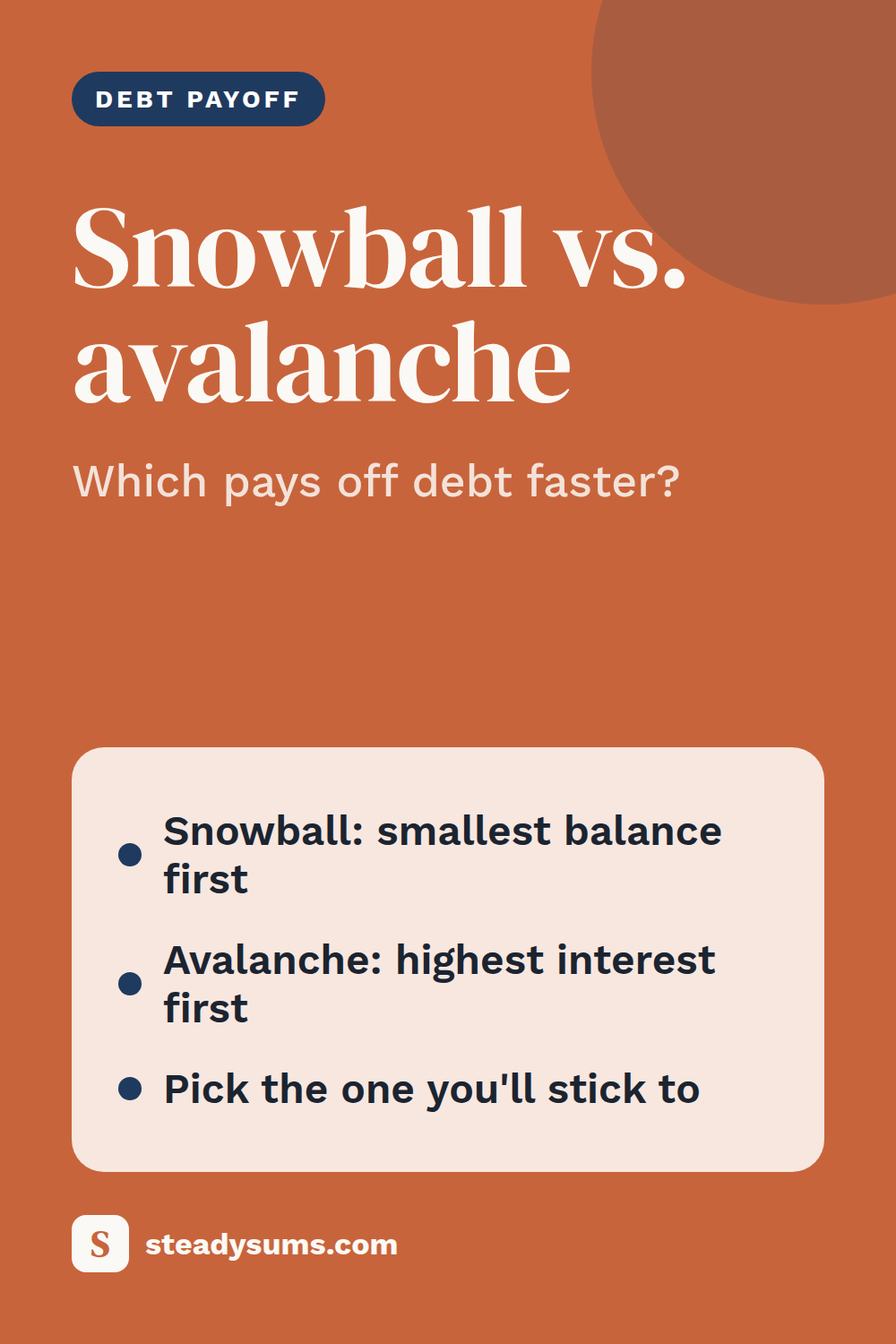
With the avalanche, you target the debt with the highest interest rate first. Because you're killing the most expensive debt earliest, you pay the least total interest and usually finish a little sooner.
Best for: people motivated by the math, and anyone with a high-rate credit card that's clearly the most expensive thing they owe.
The snowball method: smallest balance first
With the snowball, you target the debt with the smallest balance first, no matter the rate. You get a win quickly, then another, and your extra payment grows like a snowball rolling downhill.
Best for: people who need early wins to stay motivated, or who have several small balances that are easy to clear.
A side-by-side example
Say you owe three debts and can put $660 a month toward them:
- Credit card: $5,200 at 24.9% (minimum $150)
- Car loan: $8,400 at 6.5% (minimum $260)
- Medical bill: $900 at 0% (minimum $50)
Paying $660 a month, both methods finish in about 25 months. The avalanche costs about $1,809 in interest, the snowball about $1,982. That's roughly $170 in favor of the avalanche, while the snowball wipes out the medical bill within the first four months.
That's a typical result: the avalanche usually wins on money, often by less than people expect, and the snowball usually wins on early momentum. Run your own numbers with our free debt payoff calculator.
How to choose
- If one debt has a much higher rate than the others, the avalanche gap gets bigger. Lean avalanche.
- If your rates are close together, the difference is small. Pick whichever you'll stick with.
- If you've tried and stalled before, the snowball's quick wins can be worth a little extra interest.
The best method is the one you actually finish. Switching halfway is fine too.
Make either method work better
- Find extra money for the target debt. Even $50 more a month can take months off your timeline.
- Stop adding to the balances. Pause the card you're paying off if you can.
- Keep a small emergency fund. A few hundred dollars set aside keeps one surprise from going back on a card.
Try the numbers yourself.
Our free debt payoff calculator works it out in seconds. No sign-up.
Questions people ask
Is the debt snowball or avalanche faster?
The avalanche usually finishes slightly sooner and costs less interest because it targets the highest rate first. The snowball can feel faster because you clear small balances early.
Can I switch between snowball and avalanche?
Yes. You can start with the snowball for a few quick wins, then switch to the avalanche once the small debts are gone.
Should I save or pay off debt first?
Many people keep a small starter emergency fund first so a surprise expense doesn't go back on a credit card, then focus on debt.
Save this guide for later.
Pin it to your budgeting board so it's there when you need it.
Steady Sums shares general education, not financial advice. For decisions about your situation, talk to a licensed professional.
More guides
- How to budget when you're paid every two weeks
- The 50/30/20 budget rule, explained with real numbers
- How much should be in your emergency fund?
- How to start budgeting (a simple beginner guide)
- Sinking funds: the easy way to pay for big expenses
- How a zero-based budget works (and how to start one)
- The cash envelope system: how cash stuffing works
- The 52-week savings challenge: how to save $1,378 in a year
- How to do a no-spend challenge (and actually save money)
- How to pay off credit card debt faster
- Compound interest explained simply
- How to budget when your income changes every month
- How to stop living paycheck to paycheck