A no-spend challenge is a set period, often a weekend, a week or a month, when you spend money only on essentials. Everything else waits. It's less about deprivation and more about noticing your habits.
Step 1: Pick a length
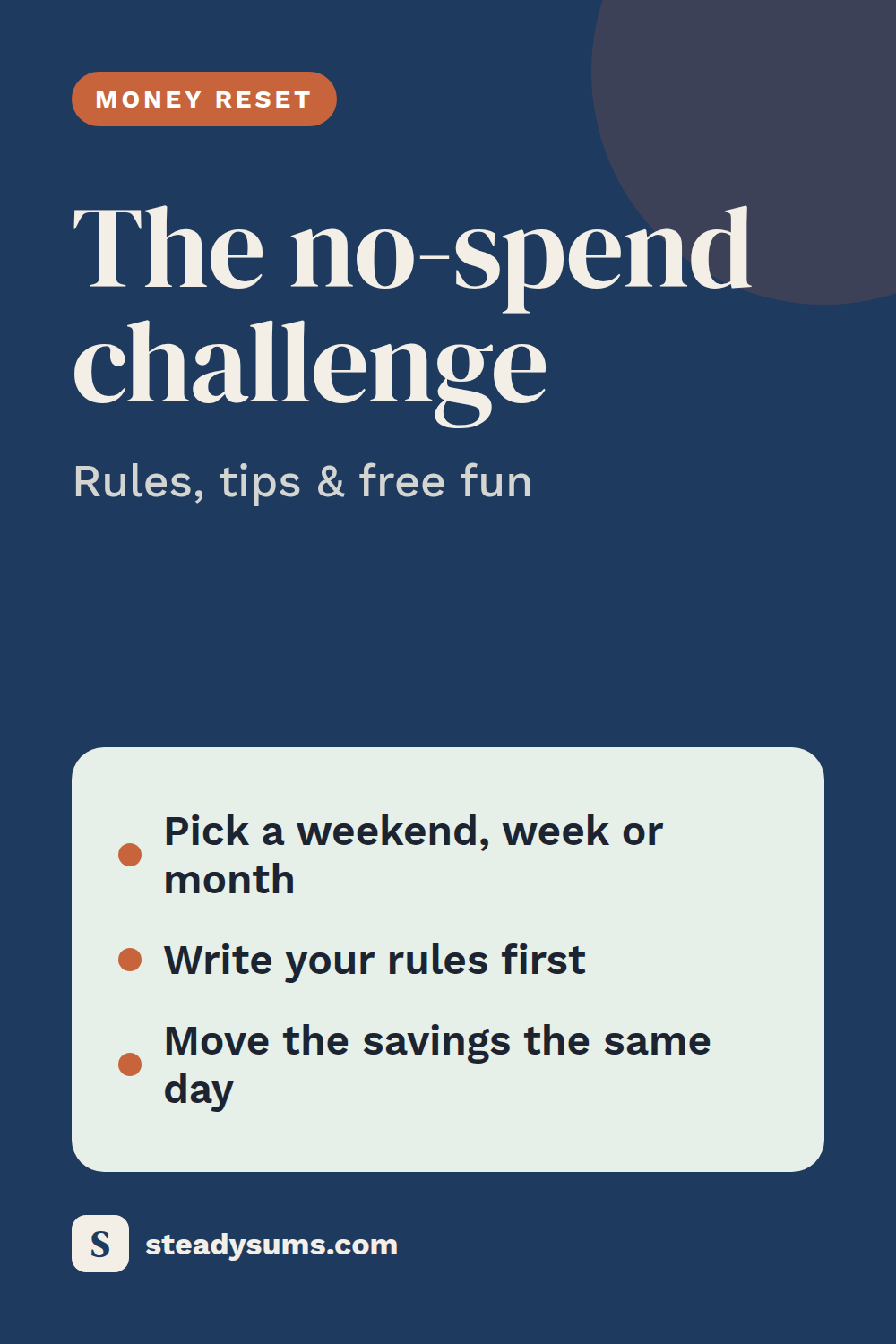
If you've never tried one, start with a no-spend weekend or week. A full no-spend month is powerful, but it's easier once you've done a short one.
Step 2: Write your rules before you start
Usually allowed:
- Rent or mortgage, utilities and all regular bills
- Groceries from a list (no extras)
- Gas to get to work and appointments
- Medicine and true emergencies
Usually paused:
- Eating out, takeout and coffee runs
- Online shopping and "just browsing"
- New clothes, decor and gadgets
- New subscriptions
Step 3: Prepare
- Plan meals and shop once before you start.
- Delete shopping apps or log out of saved cards.
- Unsubscribe from sale emails.
- Tell the people you live with, so they're on board.
Free things to do instead
- Library books, movies and events
- Parks, hikes and free museum days
- Game nights and potlucks with friends
- Cooking something new from what's in the pantry
Step 4: Give the savings a job
This is the step people skip. At the end, add up what you would normally have spent and move that amount to savings or a debt payment the same day. Otherwise it quietly gets spent the next week. Our savings goal calculator shows how quickly those savings add up toward a goal.
What you'll learn
Most people discover one or two categories, often food delivery or small online orders, that make up most of their "where did it go?" spending. That's the real prize: once you know, you can budget for it on purpose.
Try the numbers yourself.
Our free savings goal calculator works it out in seconds. No sign-up.
Questions people ask
What can you buy during a no-spend challenge?
Essentials only: regular bills, groceries from a list, gas for necessary trips, medicine and real emergencies. Set your own rules before you begin.
How much can a no-spend month save?
It depends on your habits. Add up last month's eating out, takeout, coffee and online shopping. That's roughly what a no-spend month could free up.
What if I break the no-spend challenge?
Just note what happened and keep going. A slip is useful information about where your spending triggers are.
Save this guide for later.
Pin it to your budgeting board so it's there when you need it.
Steady Sums shares general education, not financial advice. For decisions about your situation, talk to a licensed professional.
More guides
- How to budget when you're paid every two weeks
- Debt snowball vs. avalanche: which should you use?
- The 50/30/20 budget rule, explained with real numbers
- How much should be in your emergency fund?
- How to start budgeting (a simple beginner guide)
- Sinking funds: the easy way to pay for big expenses
- How a zero-based budget works (and how to start one)
- The cash envelope system: how cash stuffing works
- The 52-week savings challenge: how to save $1,378 in a year
- How to pay off credit card debt faster
- Compound interest explained simply
- How to budget when your income changes every month
- How to stop living paycheck to paycheck