A Christmas savings fund (also called a gift fund or holiday fund) is money you set aside a little at a time all year, so that by November the holidays are already paid for. It's a specific kind of sinking fund, and it's often the first one people start, because the holiday bill is the one most of us remember.
The idea is simple. The math is simple too. The hard part is starting, so this guide gives you the numbers ready to use.
Step 1: Pick your holiday number
Your number should cover the whole season, not just gifts. Think about:
- Gifts for family, friends, teachers and coworkers
- Holiday meals and hosting
- Travel to see family
- Decor, cards, postage and wrapping
- Events, outfits and donations
If you tracked what you spent last season, start there. If you didn't, list everyone you buy for with a price next to each name, add your other costs, then add 10% as a buffer. Our holiday budget guide has a full breakdown.
Step 2: Turn it into a weekly, paycheck or monthly amount
The formula: holiday number ÷ number of saves left = amount per save. Aim to have the money ready by mid-November, before the sales start.
If you start in the first week of January, you have roughly 45 weeks, 22 biweekly paychecks or 10 to 11 months before mid-November. Here's what that looks like:
| Holiday number | Per week (45) | Per biweekly check (22) | Per month (10.5) |
|---|---|---|---|
| $300 | $6.67 | $13.64 | $28.57 |
| $500 | $11.11 | $22.73 | $47.62 |
| $750 | $16.67 | $34.09 | $71.43 |
| $1,000 | $22.22 | $45.45 | $95.24 |
| $1,500 | $33.33 | $68.18 | $142.86 |
Round up to an easy number, like $12 a week instead of $11.11. The extra builds a small cushion.
Starting later? Just divide by fewer saves. Starting in April with 32 weeks left, $500 is about $15.63 a week. Starting in September with 10 weeks left, it's $50 a week, which is why an early start helps so much. Our savings goal calculator does this for any amount and date.
Step 3: Choose where the money lives
Keep your gift fund separate from everyday spending, or it will quietly get spent. Good options:
- A separate savings account. Ideally one that earns interest and isn't linked to your debit card.
- A labeled bucket inside your savings account, if your bank offers them.
- A holiday savings account offered by some banks and credit unions. Some pay the balance out automatically in the fall. Check the rules for early withdrawals before you open one.
- An envelope, if you like cash stuffing. Keep amounts small and store it safely. Larger sums are better in the bank.
Step 4: Make it automatic
Set up an automatic transfer for the day after payday. You won't miss money you never see in your checking account, and you won't have to remember. If your income is uneven, save a percentage instead of a fixed amount, like 3% of every payment. Our guide to budgeting on irregular income explains how.
Step 5: Speed it up with small wins
A few painless ways to top up the fund during the year:
- Round-ups. Round every purchase up to the next dollar and move the difference.
- Found money. Rebates, small refunds, cash gifts or money from selling things you don't use.
- Challenge weeks. A no-spend weekend each month can add a meaningful amount. See the no-spend challenge guide.
- Three-paycheck months. If you're paid every two weeks, two months a year have three paydays. Sending part of one extra check to the fund can cover a big share of the goal.
- A savings challenge. The 52-week challenge adds up to $1,378, which covers many families' holidays with room left over. Our tap-to-fill tracker keeps it fun.
What a year of saving looks like
Here's a $600 holiday number saved at $14 a week (rounded up from $13.33) starting the first week of January:
| After | Weeks saved | Balance |
|---|---|---|
| End of March | 13 | $182 |
| End of June | 26 | $364 |
| End of September | 39 | $546 |
| Mid-November | 45 | $630 |
Rounding up leaves $30 of cushion for the thing you forgot, or a head start on next year. If your savings account pays interest, you'll have a little more.
Step 6: Check in once a quarter
Every three months, compare your balance with where it should be. After 13 weeks of saving $14 a week, you should have $182. Behind? Add a little to each save or plan a no-spend weekend. Ahead? Great, leave it there.
Try not to borrow from the fund for other things. If a true emergency comes up, that's what an emergency fund is for, and if you use the gift fund anyway, plan how you'll pay it back.
Make your progress visible
Savings you can see are savings you keep adding to. Put your holiday number somewhere you'll notice it, then track progress in a way that feels rewarding: a printed chart where you color in a box for every deposit, a jar sketch on the fridge, or a savings goal with a progress bar in a budget app. If you share a household, make it a family goal. Kids can help pick the gift list and watch the total grow, which is a small, practical money lesson on its own.
Step 7: Spend it on purpose
When the season comes, make a gift list and a spending plan for the sales before you touch the fund. Spend only what's in it. If there's money left in January, roll it into next year's fund and you're already ahead.
Common questions about gift funds
What if I can only save a little? Save what you can. $5 a week from January is over $200 by November. That's $200 you won't be putting on a card.
Should I save for birthdays too? Yes, many people widen it into an "all gifts" fund. Add up every birthday, wedding and graduation gift you expect, add it to your holiday number, and save for the total.
Should I pay off debt first? If you have high-interest debt, you may want to keep the gift fund modest and put more toward the balance. But saving even a small amount for the holidays helps you avoid adding new debt in December.
Make your gift fund a game.
52-week, 100-envelope or no-spend month. Tap a box, watch the jar fill, celebrate every milestone.
Open the tracker →Try the numbers yourself
Our free savings goal calculator works it out in seconds. No sign-up.
Open the calculator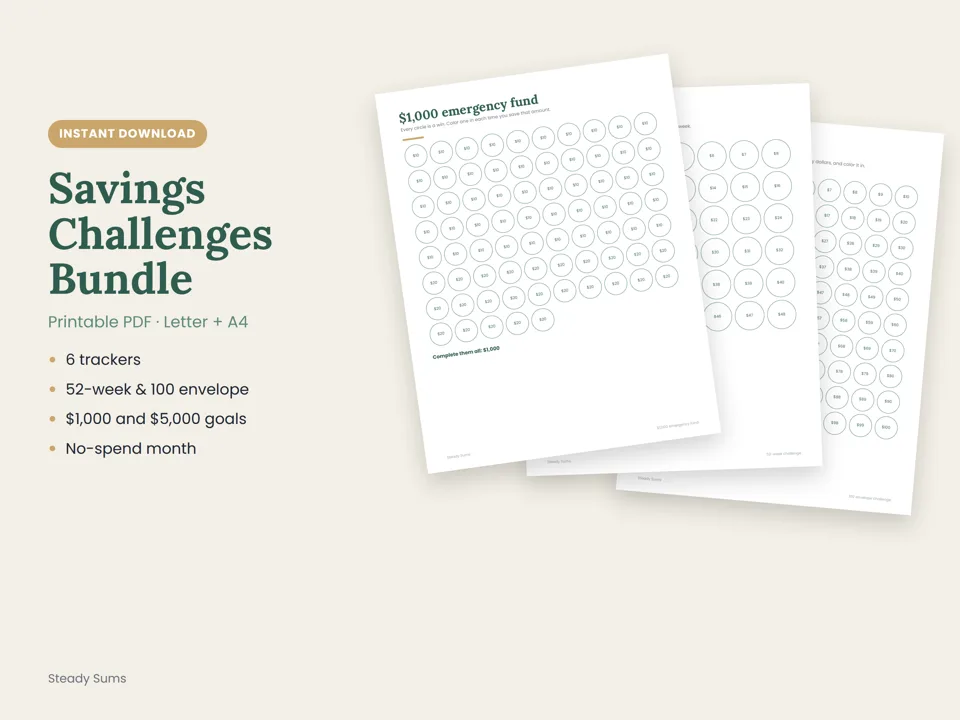
Make saving a game.
Printable savings challenges, from 52-week to $5,000 trackers. Color in a box every time you save.
Set your gift fund goal and watch it grow each payday.
Budget, debt payoff and savings goals in one calm app, on your phone or computer. Free for 14 days, then $5/month. No card needed to start.
Try the Planner freeQuestions people ask
How much should I save each week for Christmas?
Divide your holiday number by the weeks until mid-November. Starting in early January with about 45 weeks, $500 works out to about $11 a week and $1,000 to about $22 a week.
What is a Christmas savings fund?
Money you set aside a little at a time throughout the year, in a separate account or labeled bucket, so the holiday season is already paid for when it arrives. It's a type of sinking fund.
Where should I keep my Christmas fund?
In a savings account separate from your everyday spending, ideally one that earns interest and isn't linked to your debit card. Some banks offer labeled buckets or holiday savings accounts.
When should I start saving for Christmas?
In January, if you can, because you have the most weeks to spread the cost. Starting later still helps; you'll just need a larger amount each week.
How can I save $1,000 for Christmas?
Starting in early January, save about $22 a week or $46 per biweekly paycheck until mid-November. Automate the transfer and top it up with found money or a three-paycheck month.

Save this guide for later.
Pin it to your budgeting board so it's there when you need it.
Steady Sums shares general education, not financial advice. For decisions about your situation, talk to a licensed professional.
More money guides
How to budget for Christmas (without a January hangover)
The holidays don't have to end with a card bill you're still paying in March. Pick one number, split it on paper, and let the list do the deciding.
Read the guide →Sinking funds: the easy way to pay for big expenses
Most budget-busting bills aren't emergencies. They're predictable expenses that show up once or twice a year.
Read the guide →The 52-week savings challenge: how to save $1,378 in a year
Save $1 in week one, $2 in week two, and so on. It starts easy, builds a habit, and ends with $1,378 saved.
Read the guide →One calm money move a week.
A 3-minute Tuesday email with one simple step for budgeting, saving and paying off debt. Join free and get a printable $1,000 emergency fund tracker.