An emergency fund is money set aside for true surprises: a job loss, a car repair, a medical bill. Its job is to keep one bad week from turning into months of credit card debt.
The common rule: 3 to 6 months of essential expenses
Most guidance suggests saving three to six months of essential expenses. Notice it's expenses, not income, and only the essentials: housing, utilities, groceries, insurance, transportation and minimum debt payments.
If your essentials are $3,200 a month:
- 3 months: $9,600
- 6 months: $19,200
Our free emergency fund calculator works this out and shows how long it will take at your savings rate.
Should you aim for 3 months or 6?
Lean toward more if your income is irregular, you're self-employed, you're the only earner in your household, or your job would be hard to replace quickly. Three months can be enough if you have steady income, a second earner, or other savings you could tap.
Start with a starter fund
Six months of expenses can feel impossible. Don't start there. Start with a $1,000 starter fund, which covers many common surprises like a tire or a copay. Then build toward one month, then three.
Where to keep it
Keep your emergency fund somewhere safe, separate and easy to reach. A high-yield savings account at an FDIC-insured bank is a popular choice: your money earns some interest, it's not mixed with everyday spending, and you can usually move it in a day or two. It's generally not a good idea to keep emergency money in investments that can drop in value right when you need them.
How to build it faster
- Automate it. Set a transfer for the day after payday, even $25.
- Use windfalls. Tax refunds, bonuses and three-paycheck months can jump-start the fund.
- Name it. An account called "Emergency fund" is harder to raid for a sale.
When to use it (and when not to)
Use it for things that are necessary, urgent and unexpected. A holiday or a planned car registration isn't an emergency; those belong in a sinking fund. After you use it, make refilling it your next goal.
Try the numbers yourself.
Our free emergency fund calculator works it out in seconds. No sign-up.
Questions people ask
How much should a beginner have in an emergency fund?
A common first goal is $1,000. After that, build toward three to six months of essential expenses.
Should I pay off debt or build an emergency fund first?
Many people build a small starter fund first so surprises don't go on a credit card, then focus on high-interest debt while slowly growing savings.
Where should I keep my emergency fund?
Somewhere safe, separate from your checking account and easy to access, such as a high-yield savings account at an FDIC-insured bank.
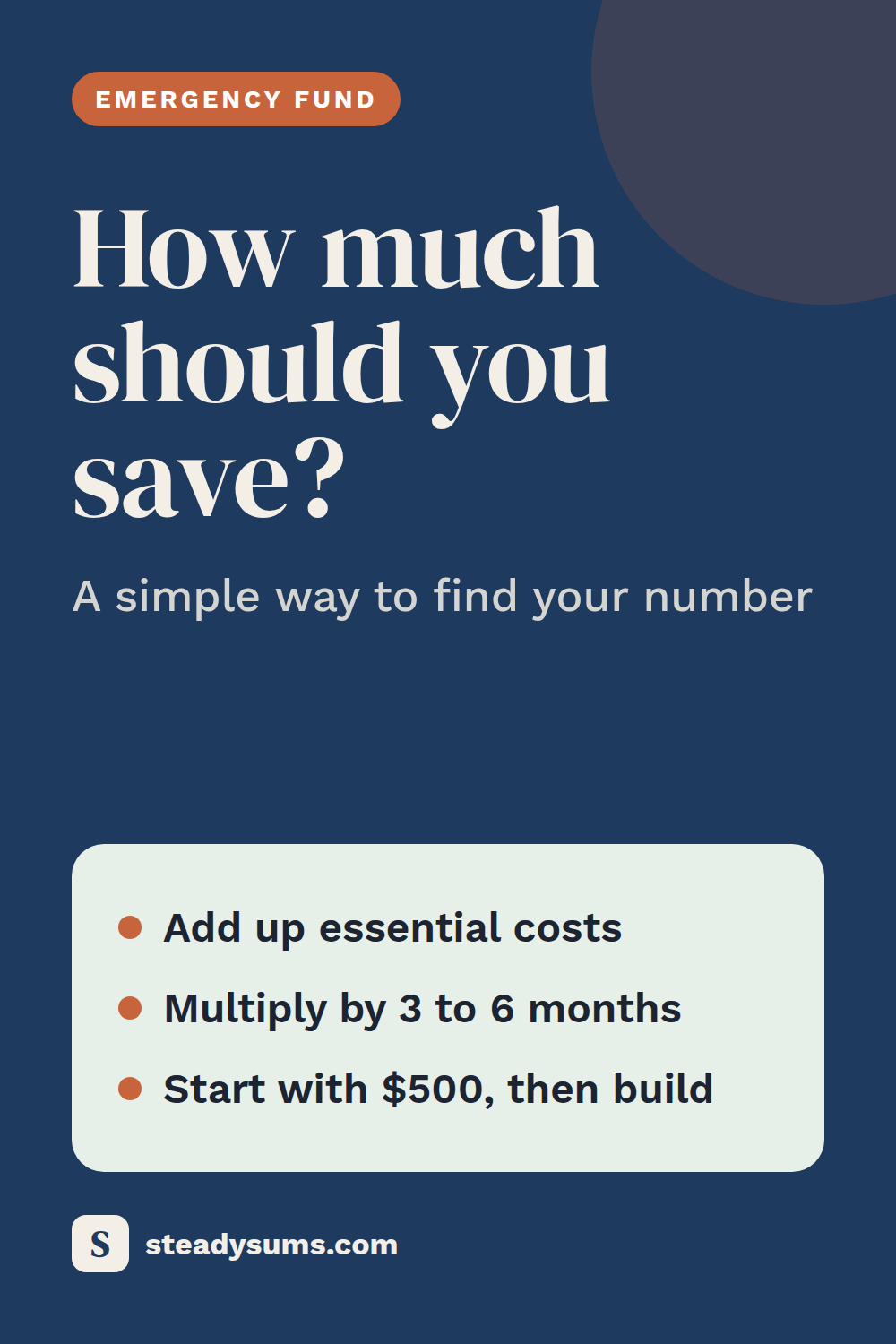
Save this guide for later.
Pin it to your budgeting board so it's there when you need it.
Steady Sums shares general education, not financial advice. For decisions about your situation, talk to a licensed professional.
More guides
- How to budget when you're paid every two weeks
- Debt snowball vs. avalanche: which should you use?
- The 50/30/20 budget rule, explained with real numbers
- How to start budgeting (a simple beginner guide)
- Sinking funds: the easy way to pay for big expenses
- How a zero-based budget works (and how to start one)
- The cash envelope system: how cash stuffing works
- The 52-week savings challenge: how to save $1,378 in a year
- How to do a no-spend challenge (and actually save money)
- How to pay off credit card debt faster
- Compound interest explained simply
- How to budget when your income changes every month
- How to stop living paycheck to paycheck