Living paycheck to paycheck means your money runs out right as the next check arrives, with nothing left over. It happens at many income levels. The way out is to create a small gap between earning and spending, then slowly widen it.
1. See where the money goes
Go through the last month of bank and card statements and put every purchase in a category. Most people find a few surprises, often food delivery, subscriptions or small online orders.
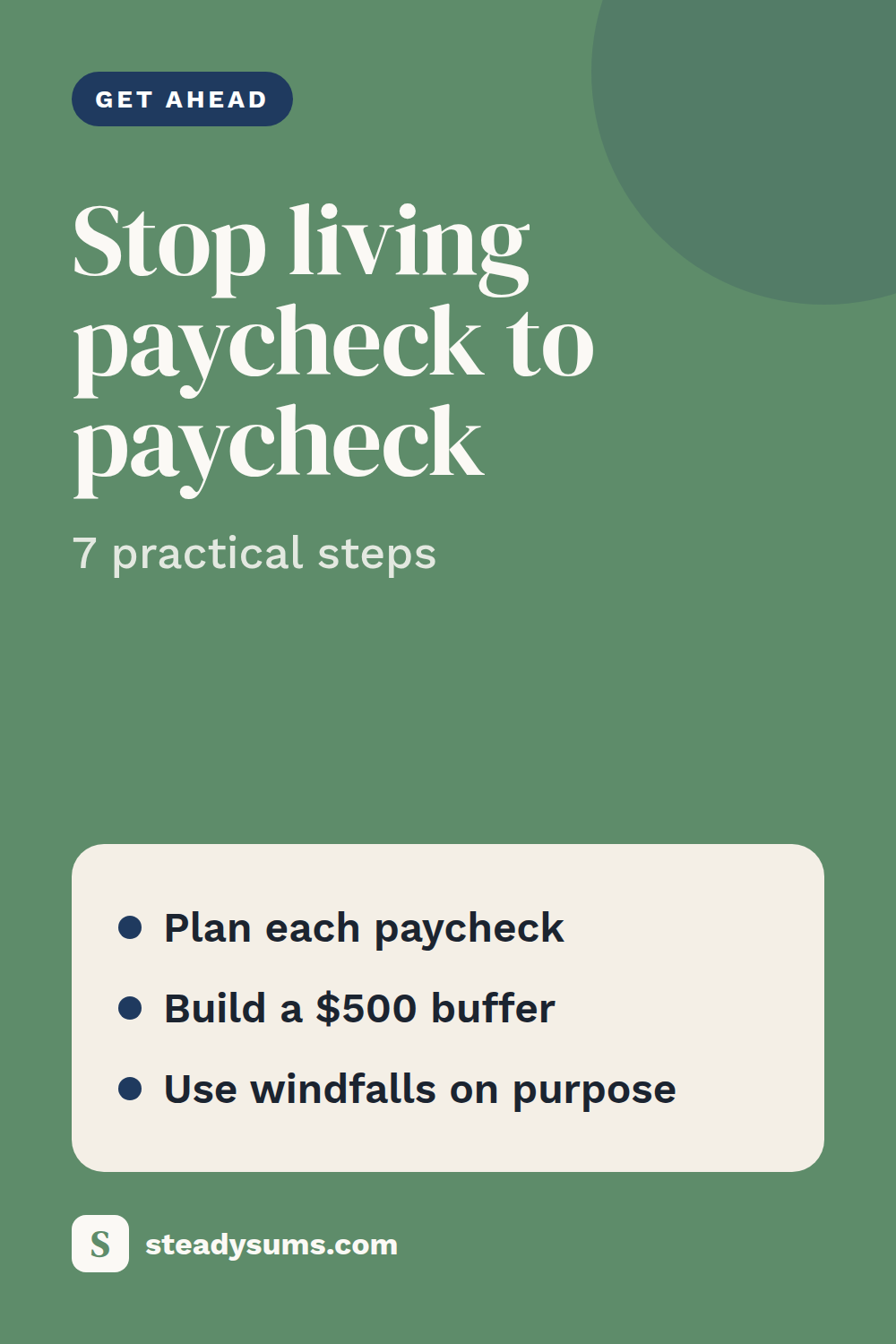
2. Plan each paycheck, not just the month
Decide which bills each paycheck covers before it arrives. See how to budget biweekly pay for a step-by-step method.
3. Build a $500 starter buffer
A small cushion stops one surprise from turning into a late fee or new debt. Save a little from each check, even $25, until you reach $500, then work toward a full emergency fund.
4. Cut one big thing, not twenty small ones
Small cuts feel painful and rarely last. One bigger change often works better: a cheaper phone plan, shopping insurance rates, canceling a streaming bundle, or cooking at home four nights a week.
5. Move bill due dates
Many companies let you pick your due date. Spreading bills evenly across paychecks can end the "one tight check" problem.
6. Tackle high-interest debt
Interest payments are money that leaves every month with nothing to show for it. A clear credit card payoff plan frees up more of each paycheck over time.
7. Use windfalls on purpose
Tax refunds, bonuses and three-paycheck months are your fastest way out. Decide their job ahead of time: buffer first, then debt, then savings goals.
Be patient with yourself
Getting one paycheck ahead usually takes a few months. Every week the buffer grows, the next surprise becomes a little less stressful.
Try the numbers yourself.
Our free paycheck budget calculator works it out in seconds. No sign-up.
Questions people ask
How do I get one paycheck ahead?
Build a buffer equal to one paycheck's worth of bills by saving a little from every check and adding any windfalls. Once it's there, pay this month's bills with last month's pay.
How much should I save if I live paycheck to paycheck?
Start small and consistent, even $10 to $25 a check. The habit matters more than the amount at first.
What's the first step to stop living paycheck to paycheck?
Track where your money went last month. You can't plan a change until you know where the leaks are.
Save this guide for later.
Pin it to your budgeting board so it's there when you need it.
Steady Sums shares general education, not financial advice. For decisions about your situation, talk to a licensed professional.
More guides
- How to budget when you're paid every two weeks
- Debt snowball vs. avalanche: which should you use?
- The 50/30/20 budget rule, explained with real numbers
- How much should be in your emergency fund?
- How to start budgeting (a simple beginner guide)
- Sinking funds: the easy way to pay for big expenses
- How a zero-based budget works (and how to start one)
- The cash envelope system: how cash stuffing works
- The 52-week savings challenge: how to save $1,378 in a year
- How to do a no-spend challenge (and actually save money)
- How to pay off credit card debt faster
- Compound interest explained simply
- How to budget when your income changes every month