How much should I spend on groceries?
A grocery budget that actually holds: find your real number, check it against the USDA food plans, then shop to a weekly cap.
Groceries are one of the few big bills you control every single week. That makes them a great place to find money, and also the line that blows up most budgets. The fix is not clipping every coupon. It is picking a realistic number, turning it into a weekly cap and shopping to that cap. Here is how to do it in an afternoon.
Step 1: Find what you really spend now
Open your bank and card statements for the last two or three months and add up every food store charge. Include warehouse clubs, delivery fees and tips, and the quick stops for milk that never feel like "real" shopping. Keep restaurants, takeout and coffee runs on a separate line: those are eating out, not groceries.
Divide the total by the number of months. That is your starting number. Most people are surprised, and that is fine. You can't trim a number you have never seen.
Step 2: Compare it with the USDA food plans
The U.S. Department of Agriculture publishes a monthly Cost of Food report with four food plans, from lowest to highest cost: Thrifty, Low-Cost, Moderate-Cost and Liberal. Each one shows what a healthy diet costs per month for people of different ages, cooking most meals at home. You add up the amounts for each person in your house.
- If your number is near the Low-Cost or Moderate-Cost plan, your spending is in a normal range. Small habits will do more than big cuts.
- If it is well above the Liberal plan, look for waste: food thrown out, extra trips, delivery fees, or eating-out costs mixed in.
- If it is below the Thrifty plan and meals feel tight, the budget may be too low to hold. A plan you can keep beats a plan that breaks by week two.
Use the report as a reality check, not a target. Prices differ a lot by region, and special diets cost more.
Step 3: Turn it into a weekly cap
Monthly numbers are hard to feel at the register. A weekly cap is easy. Multiply your monthly amount by 12, then divide by 52:
| Monthly grocery budget | Weekly cap | How it's figured |
|---|---|---|
| $400 | $92 | $400 × 12 ÷ 52 |
| $600 | $138 | $600 × 12 ÷ 52 |
| $800 | $185 | $800 × 12 ÷ 52 |
| $1,000 | $231 | $1,000 × 12 ÷ 52 |
Why not just divide by four? Most months have a little more than four weeks, so "monthly ÷ 4" leaves you short in the months with a fifth shopping trip.
Step 4: Plan meals from what you already have
Before you write a list, look in the fridge, freezer and pantry. Build the week's dinners around what needs using up first, then fill the gaps. A simple pattern that works for most homes:
- Four or five planned dinners, at least one of them a big batch that becomes lunch.
- One leftovers night to clear the fridge.
- One flexible night (eggs, pasta, soup, freezer meal) for when plans change.
Planning fewer meals than days sounds odd, but it is what stops good food from going bad.
Step 5: Shop with a list and the cap in mind
- Write the list by store section so you are not wandering past end-cap deals.
- Compare unit prices (price per ounce or per count) on the shelf tag, not the sticker price.
- Try store brands on staples like rice, oats, canned beans, flour and frozen vegetables.
- Buy produce in season, or frozen. Frozen fruit and vegetables keep for months and cut waste.
- Keep a running total on your phone as you shop. When you reach the cap, the rest waits for next week.
- Fewer trips. Every "quick stop" tends to add a few unplanned items.
Step 6: Check in once a week
Same day each week, write down what you spent. Under the cap? Move the difference to savings or roll it into next week for a stock-up item. Over? Note why (a party, a pantry restock, prices up) and adjust the next list instead of giving up on the month.
After a month or two, you will know your true number, and you can set it as the grocery line in your budget for good.
Example: A household of three finds it spent an average of $910 a month on food stores plus $140 in delivery fees and tips. It moves to one pickup order a week, sets a $600 monthly budget (a $138 weekly cap) and keeps a $60 buffer for holidays and guests. After two months, it is spending about $640 a month, roughly $410 less than before.
Where groceries fit in the 50/30/20 rule
Groceries are a need, so they belong in the 50% bucket with rent and utilities. Restaurants, takeout and treats are wants and sit in the 30% bucket. Keeping the two apart is what lets you see where food money really goes. The 50/30/20 guide walks through the full split.
Heading into the holidays? Big meals and baking can double a normal week. Give them their own line in your holiday money plan so the regular grocery cap stays honest.
Put the number in your budget
Once you have a grocery number you can live with, give it a fixed place in your monthly plan. Our free budget calculator shows how groceries, rent and the rest fit your take-home pay in a few seconds. If food spending keeps creeping up, the money leak finder shows what small habits like delivery fees add up to over a year.
What's your money style?
8 everyday money moments reveal your style, your blind spot and a 3-step plan. Compare with a partner.
Take the quiz →See where groceries fit
Enter your take-home pay and see a needs, wants and savings split, with room for your grocery number. No sign-up.
Open the budget calculator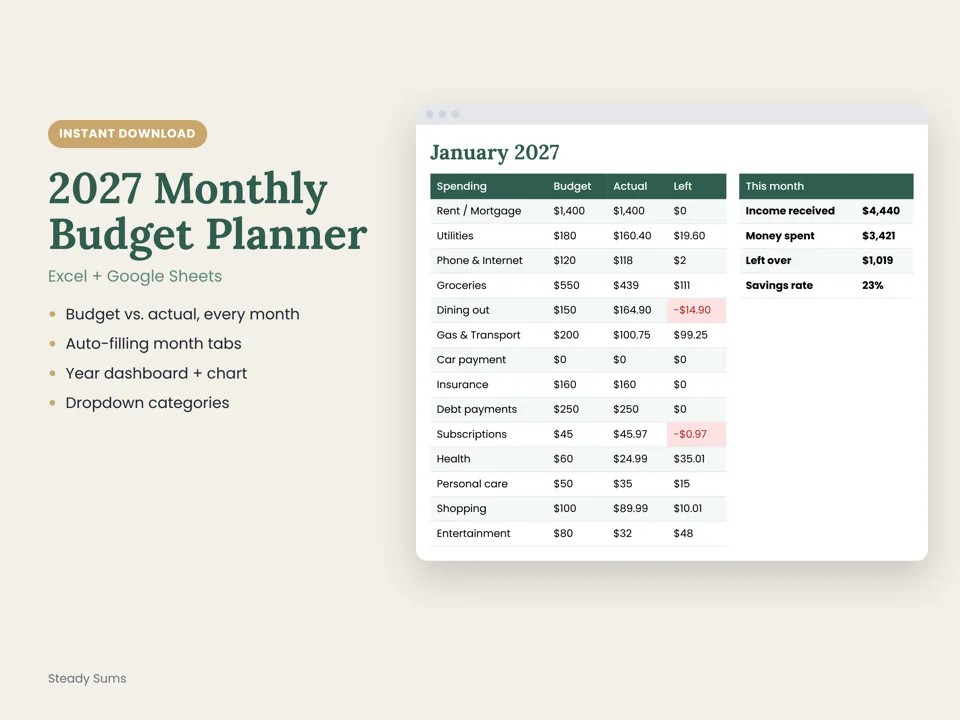
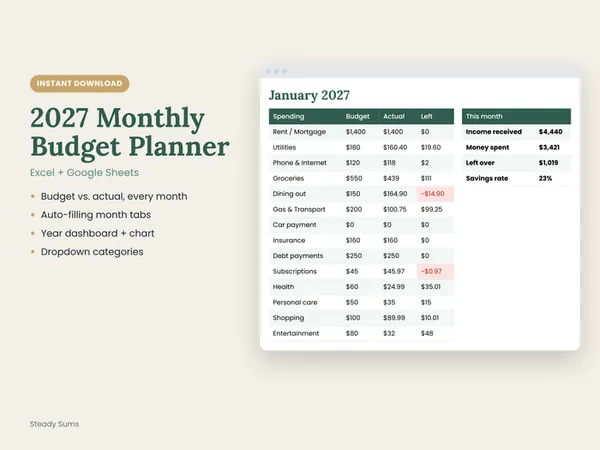
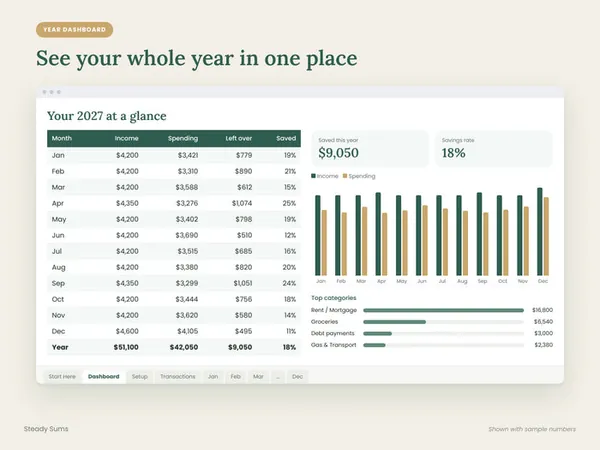
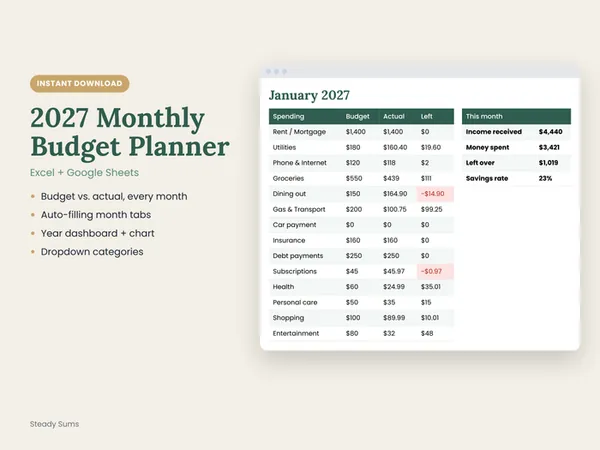
Track groceries against your cap, month by month.
Set your grocery line once, log what you spend and watch the totals update. Works in Excel and Google Sheets.
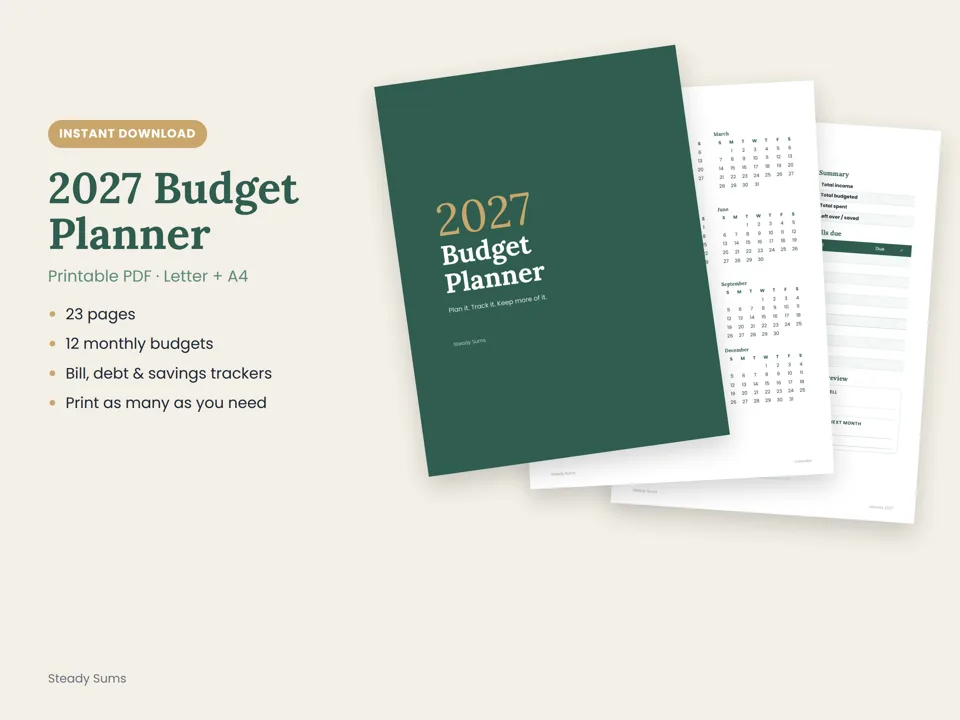
A printable planner for the fridge.
Monthly budget, bills and savings pages you can print at home and fill in by hand, including a spot for your weekly grocery check-in.
Set a grocery cap and see it every day.
Budget, debt payoff and savings goals in one calm app, on your phone or computer. Free for 14 days, then $5/month. No card needed to start.
Try the Planner freeQuestions people ask
How much should one person spend on groceries a month?
It depends on age, region and diet. The USDA Cost of Food report lists monthly amounts for each age group at four levels, from Thrifty to Liberal. Compare your own spending with the Low-Cost and Moderate-Cost plans as a starting point.
Is $100 a week enough for groceries?
For one adult who cooks most meals at home, $100 a week is often workable. For a family it is usually tight. Use the USDA food plans for your household as a guide, then adjust for local prices.
Do groceries count as a need or a want?
Groceries are a need and sit in the needs part of your budget. Restaurants, takeout and treats are wants, so track them on a separate line.
Should I divide my monthly grocery budget by 4?
Dividing by 4 leaves you short in months with five shopping weeks. Multiply the monthly amount by 12 and divide by 52 to get a weekly cap that holds all year.
What is the fastest way to lower a grocery bill?
Shop from a list built around food you already have, plan a leftovers night, compare unit prices, switch staples to store brands and make fewer trips.
Sources: U.S. Department of Agriculture, USDA Food Plans: Monthly Cost of Food Reports; USDA Economic Research Service, Food Price Outlook. Figures in the example are illustrations, not your actual costs.
Education only, not financial advice. Steady Sums shares general education; for decisions about your situation, talk to a licensed professional.
More money guides
How to stop living paycheck to paycheck
Running out before payday is stressful and common. These seven steps build breathing room one paycheck at a time.
Read the guide →The 50/30/20 budget rule, explained with real numbers
A simple starting point for splitting your paycheck, and what to do when real life doesn't fit neatly into it.
Read the guide →How to start budgeting (a simple beginner guide)
You don't need a perfect spreadsheet. You need five steps and about an hour.
Read the guide →Make it easier with the right tool


One calm money move a week.
A 3-minute Tuesday email with one simple step for budgeting, saving and paying off debt. Join free and get a printable $1,000 emergency fund tracker.
Free. One email a week. Unsubscribe any time.